


STEM Kit · Age 8+
Solar System
Build it. Explore it. See the solar system come to life.
Start building Get this kit →

8+
Age
★★☆☆☆
Difficulty
30–60 min
Build time
Building · Painting · Astronomy
Skills
Step by step
Instructions
Work through the steps in order. Each step has a photo of what your build should look like when it is done.

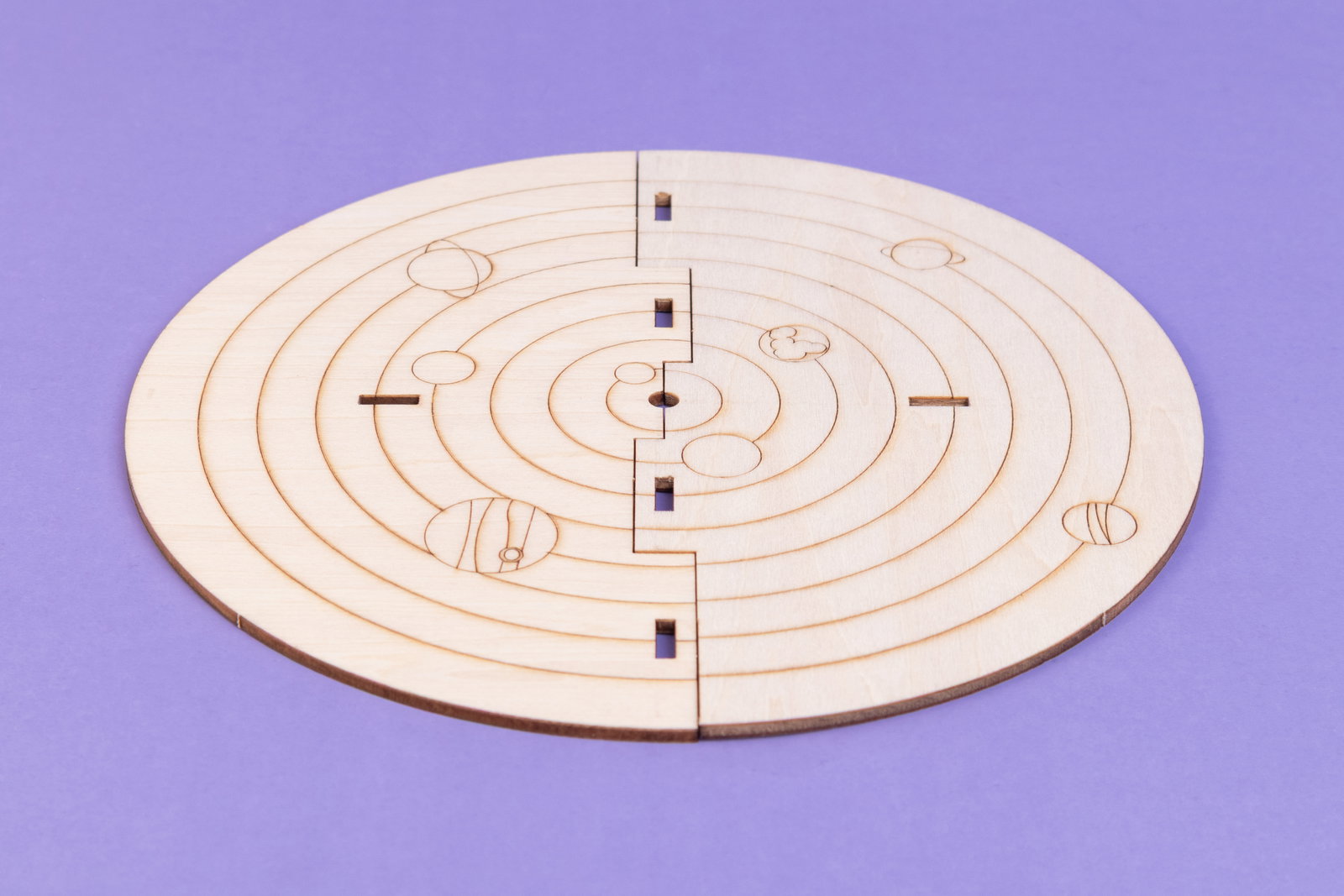
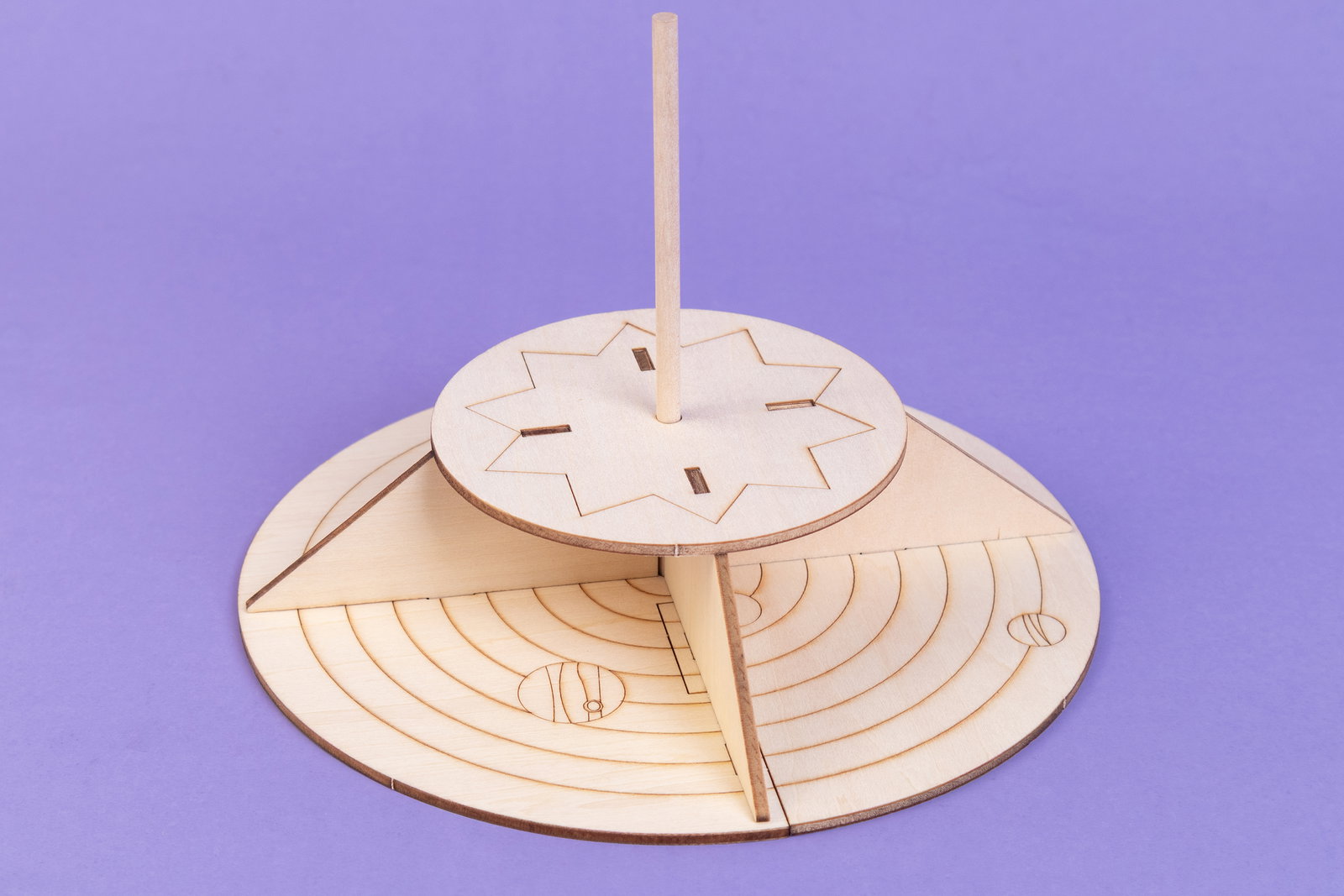
Assemble the Base
Connect the base pieces as shown, making sure all slots are aligned.
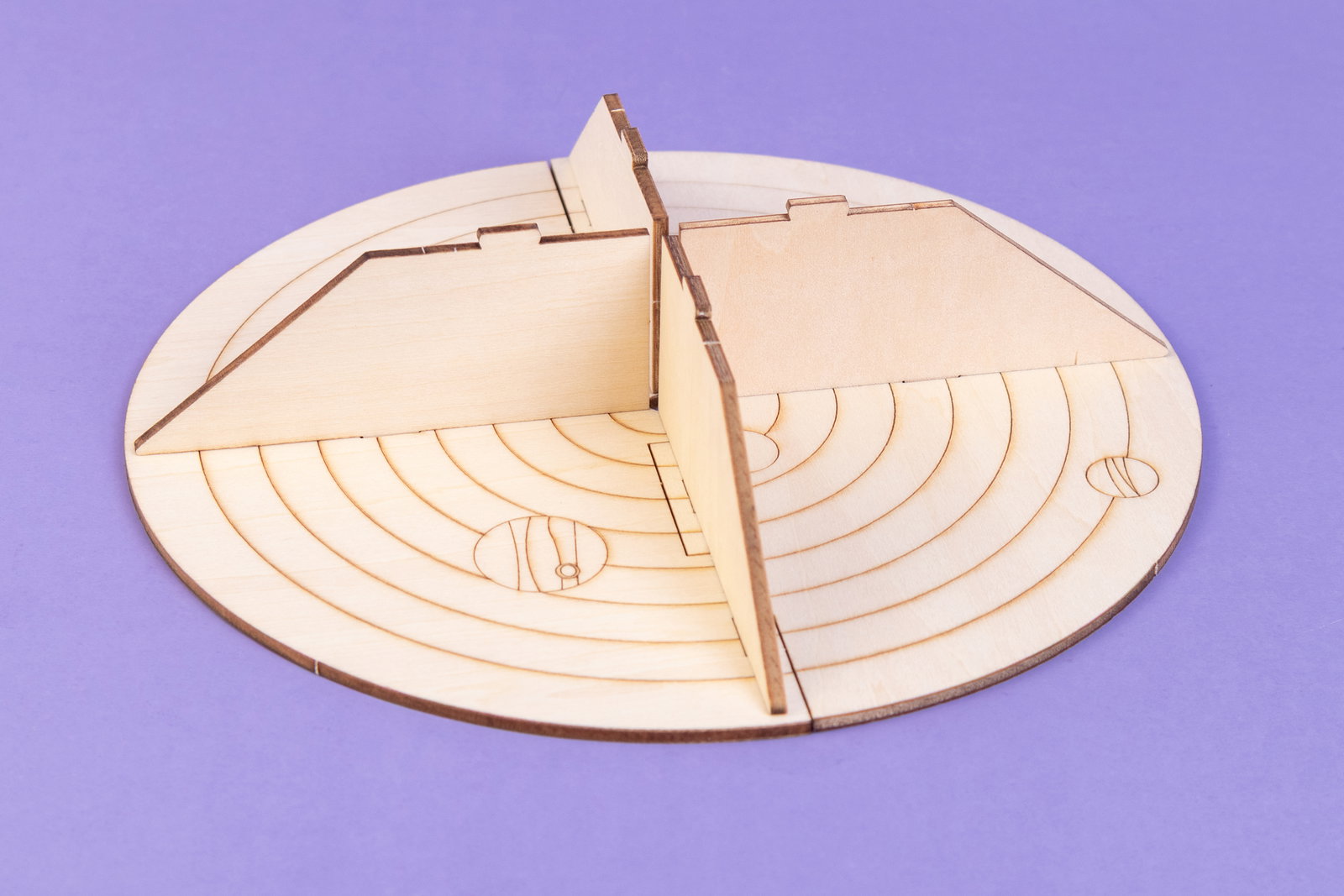
Add the Supports
Insert the four support panels into the slots on the base.

Tip: Press each piece firmly into place so the structure stays level.
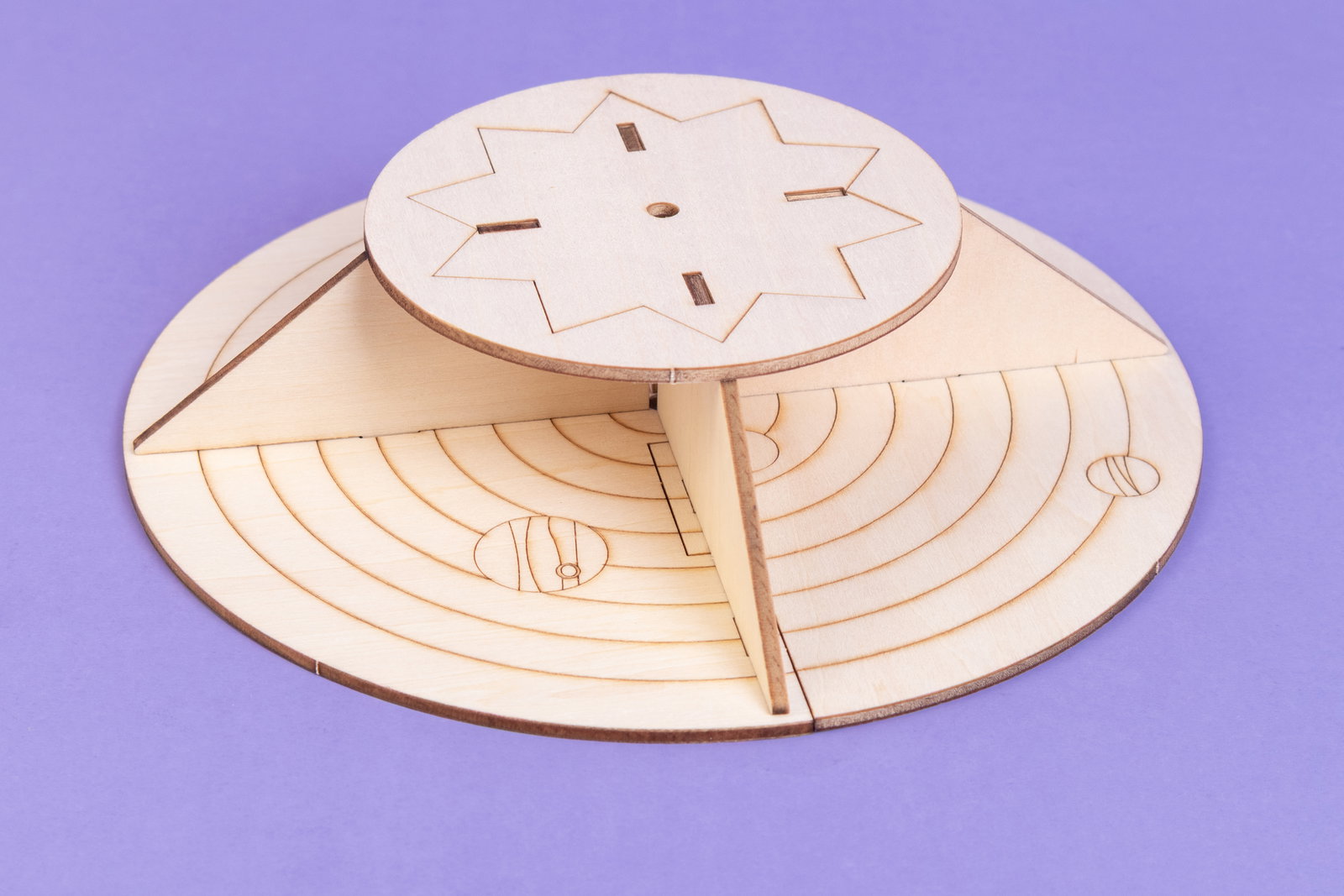
Install the Top Platform
Place the round platform onto the four supports and align it with the slots.
Insert the Center Rod
Insert the wooden rod through the center hole of the top platform.
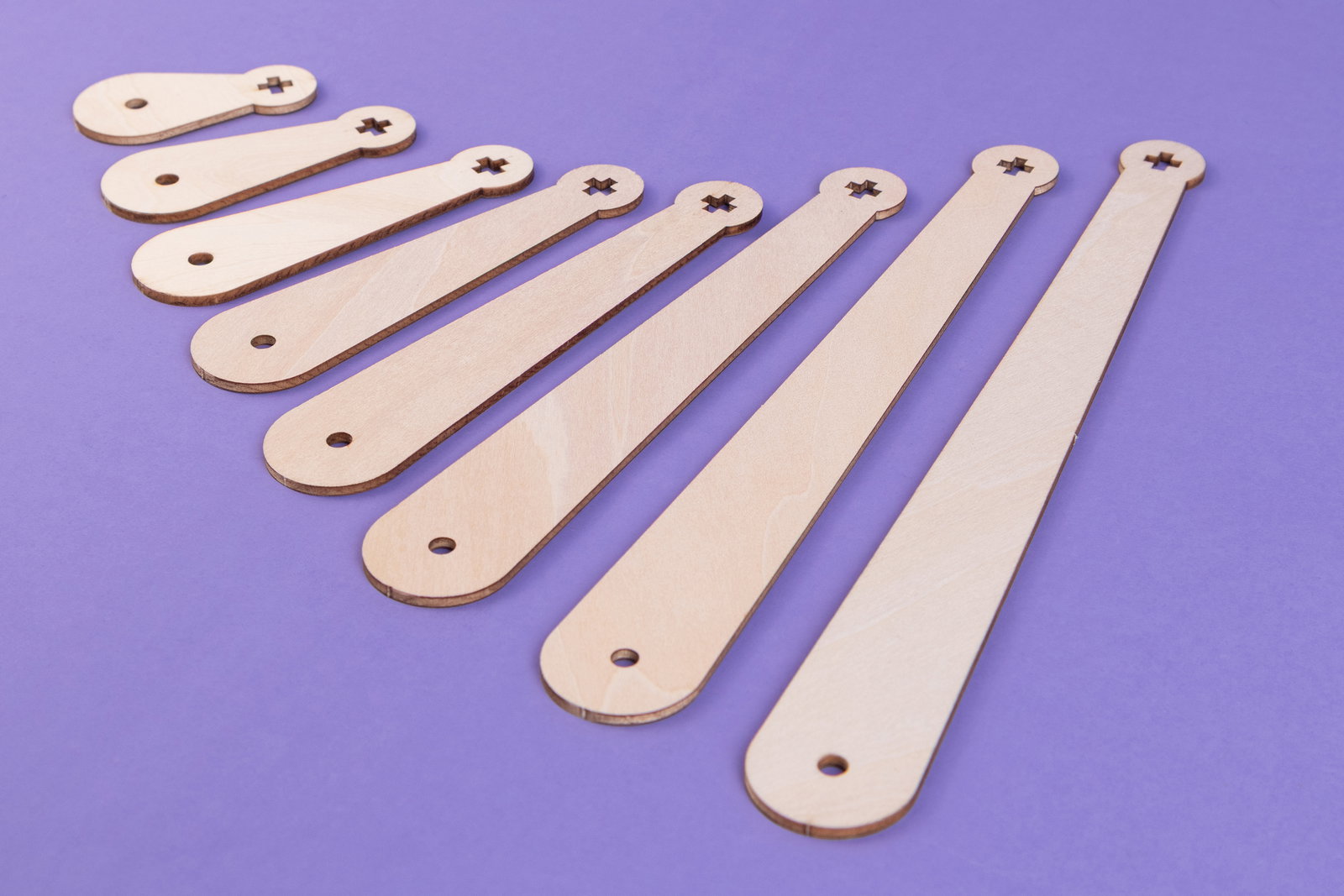
Identify the Planet Arms
Arrange the eight planet arms from shortest to longest.
Tip: Each arm represents a different planet and will be stacked around the center rod.
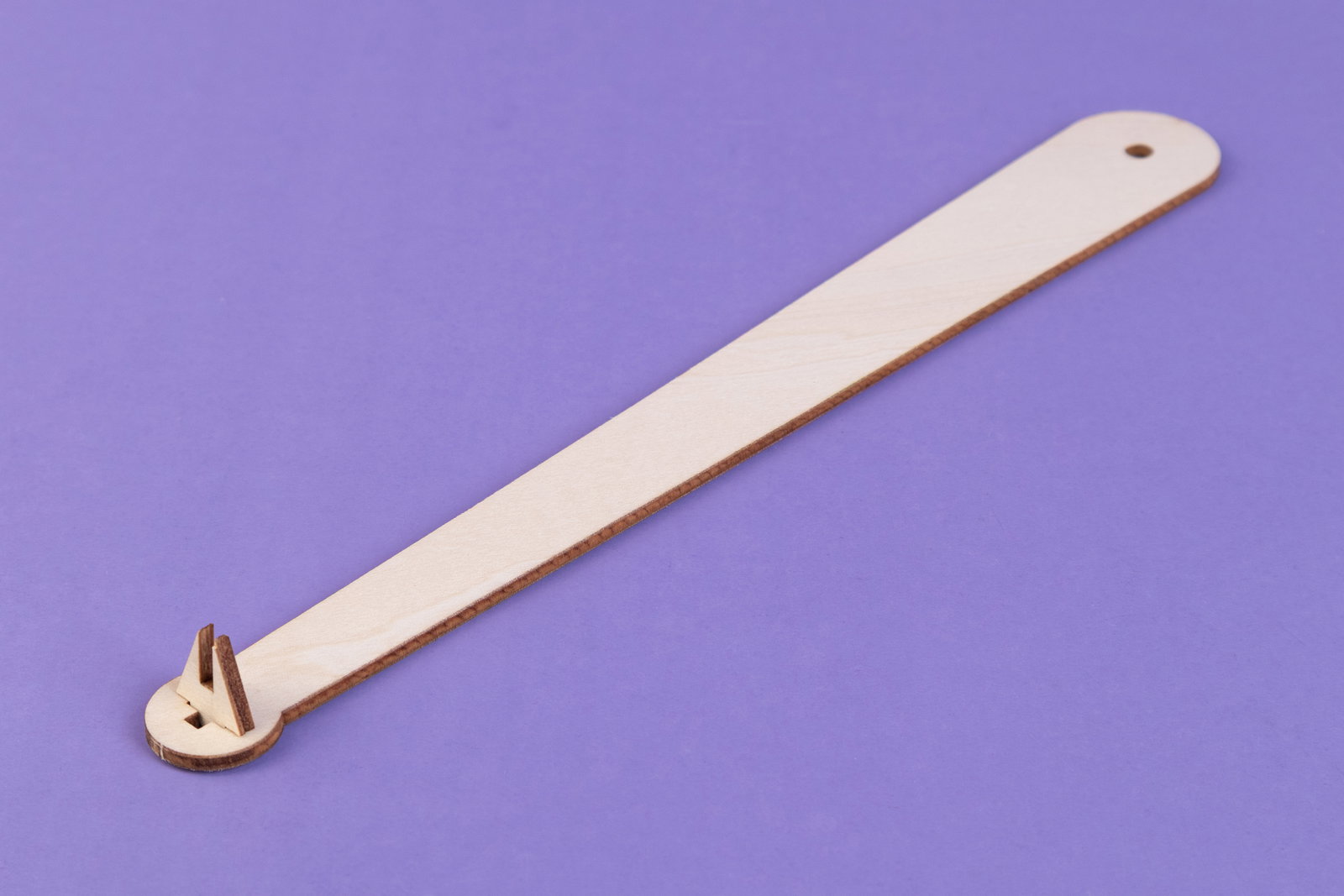
Add the Support Braces
Insert the small support pieces into the slots at the end of the planet arm.
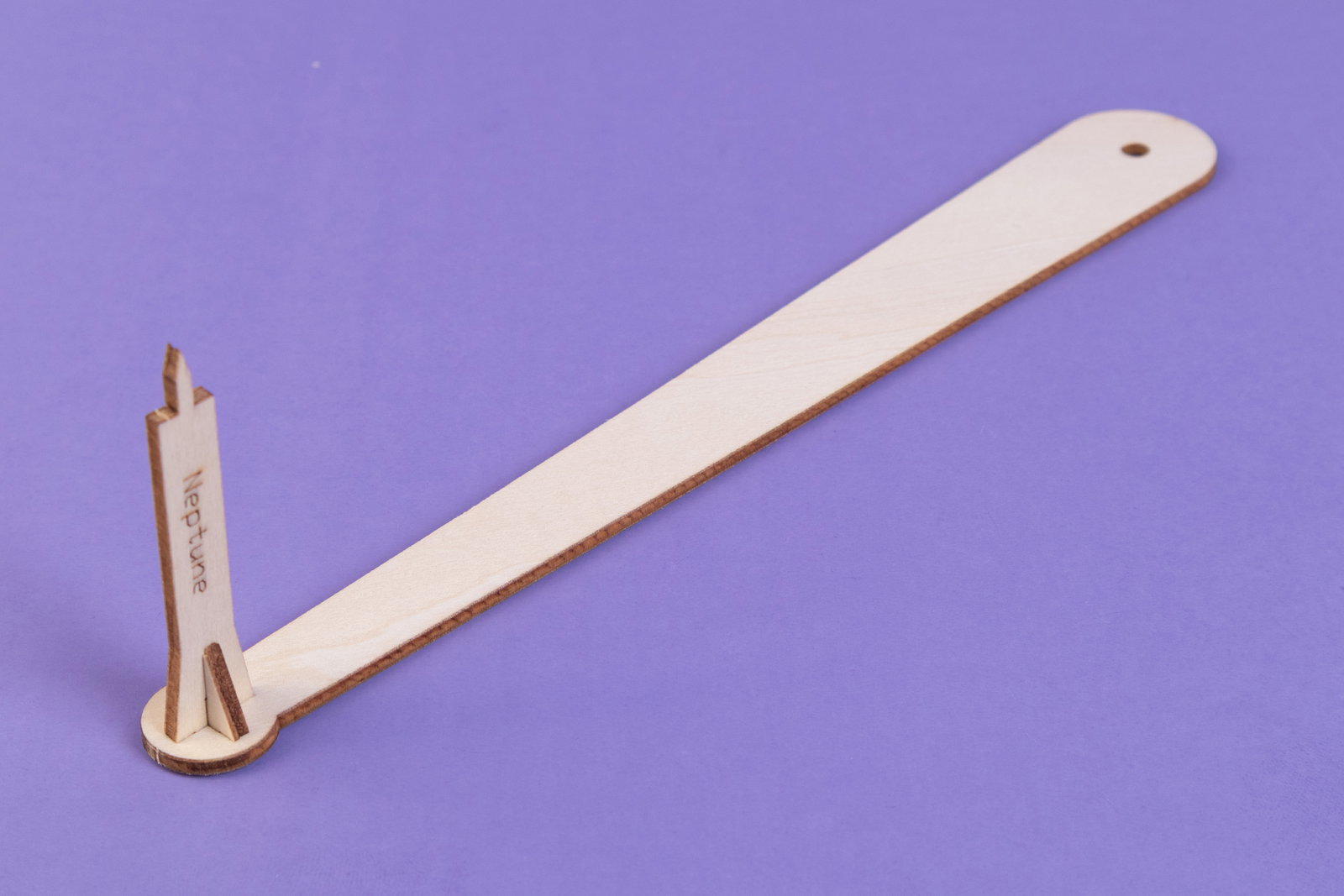
Install the Planet Marker (Neptune)
Slide the labeled planet piece into the center slot between the two supports.
Add the First Planet Arm
Slide the first planet arm onto the center rod as shown.
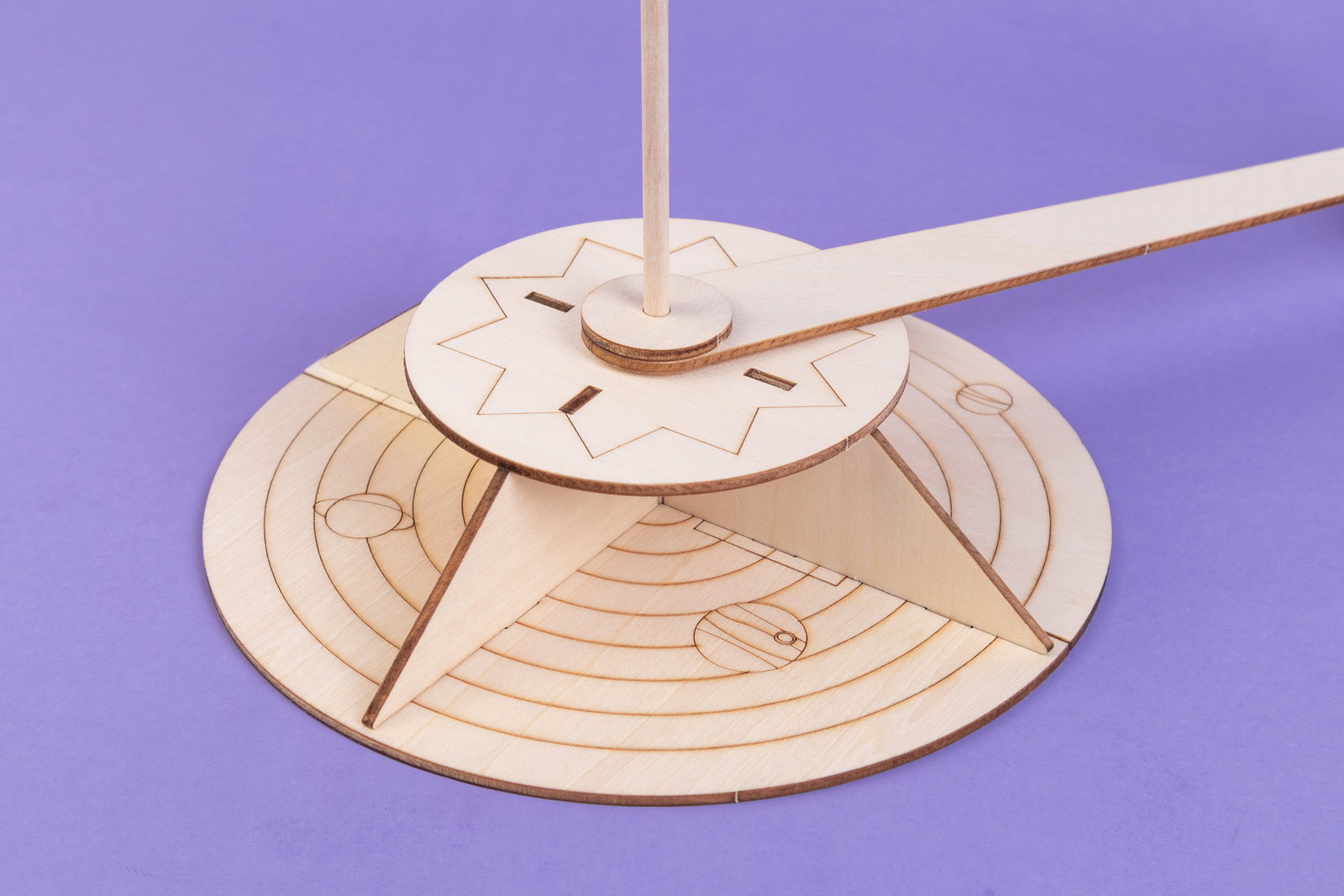
Continue Stacking the Arms
Add the remaining planet arms onto the center rod, one at a time.
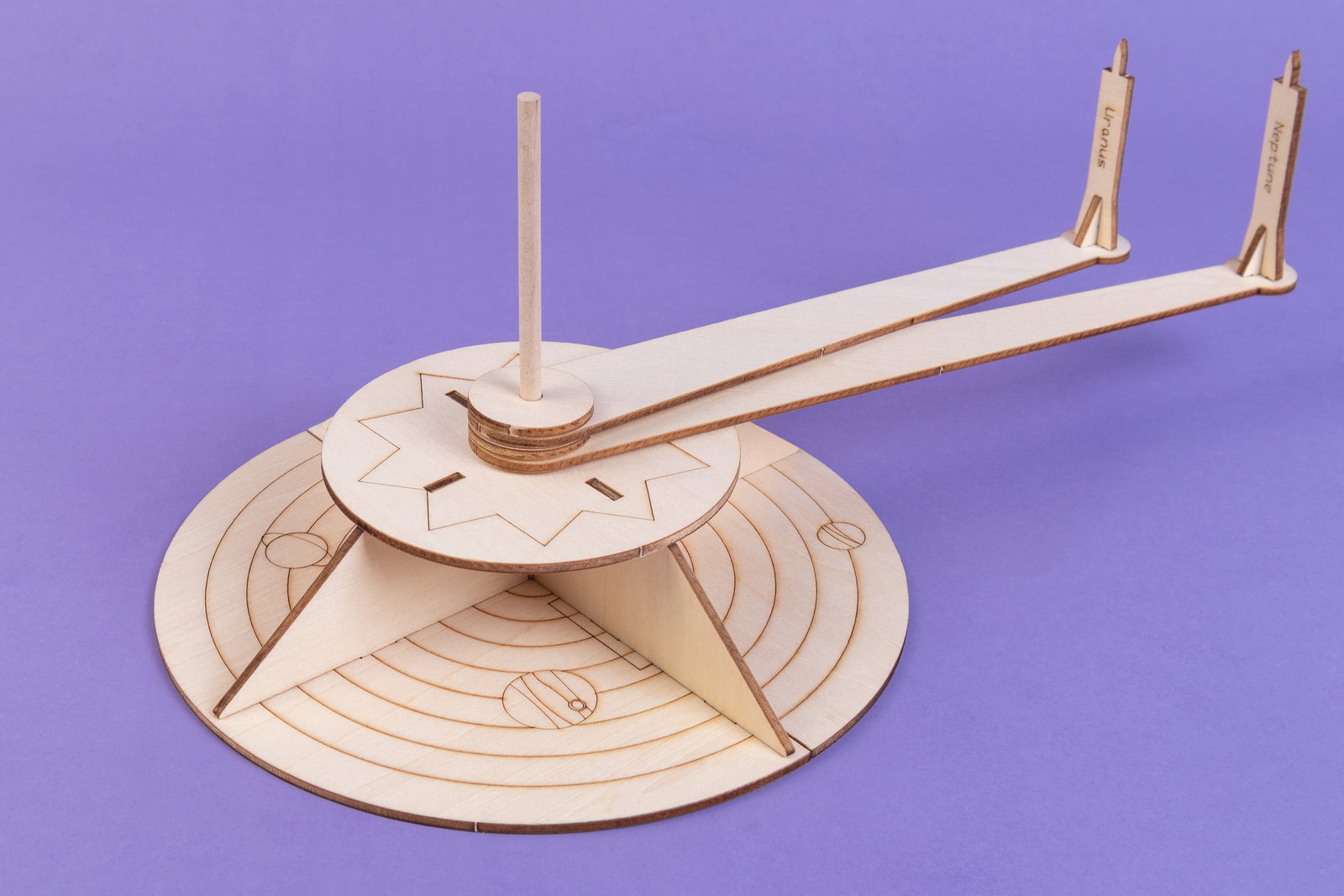
Check the Planet Order
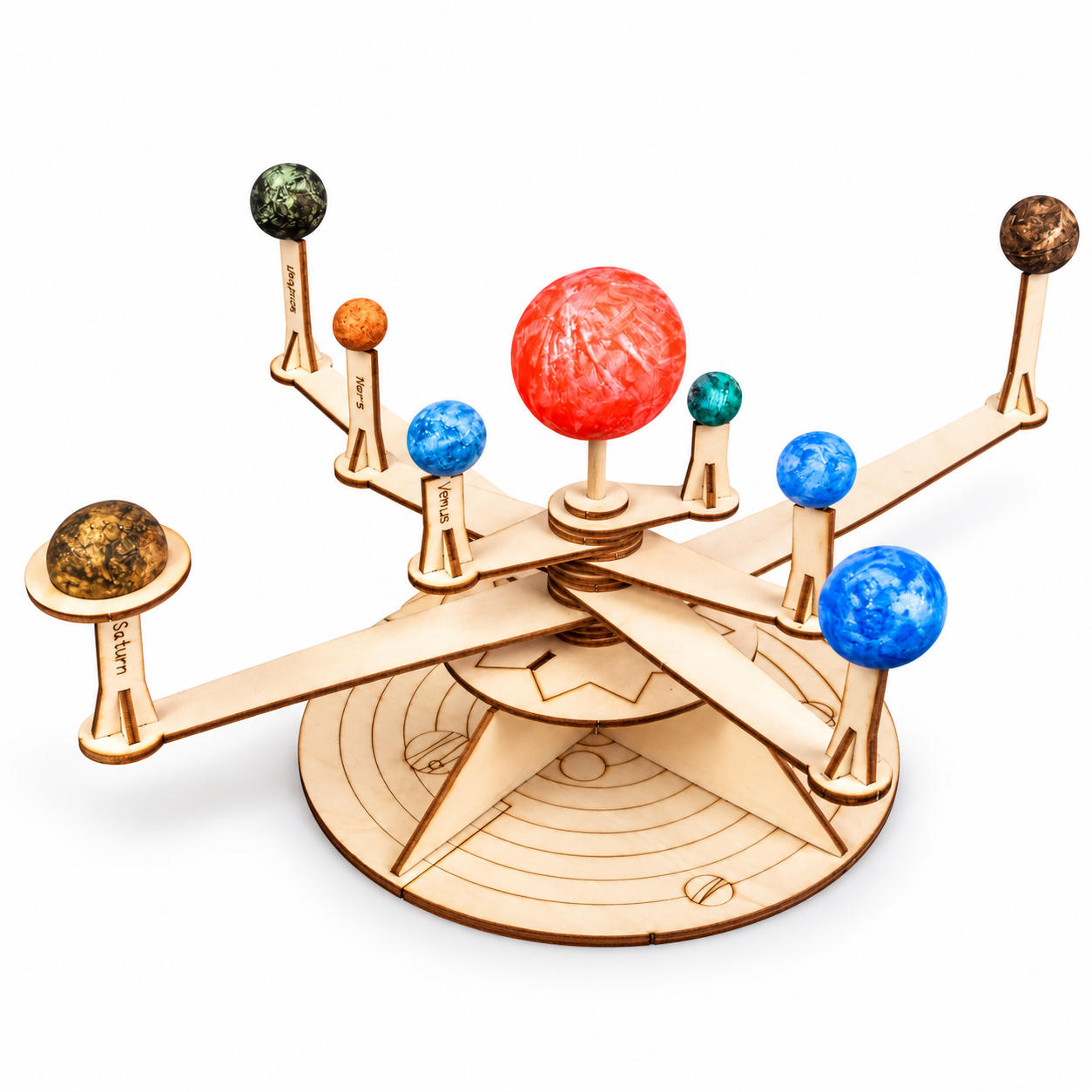
Make sure the planets are arranged from closest to farthest from the Sun:
Mercury → Venus → Earth → Mars → Jupiter → Saturn → Uranus → Neptune
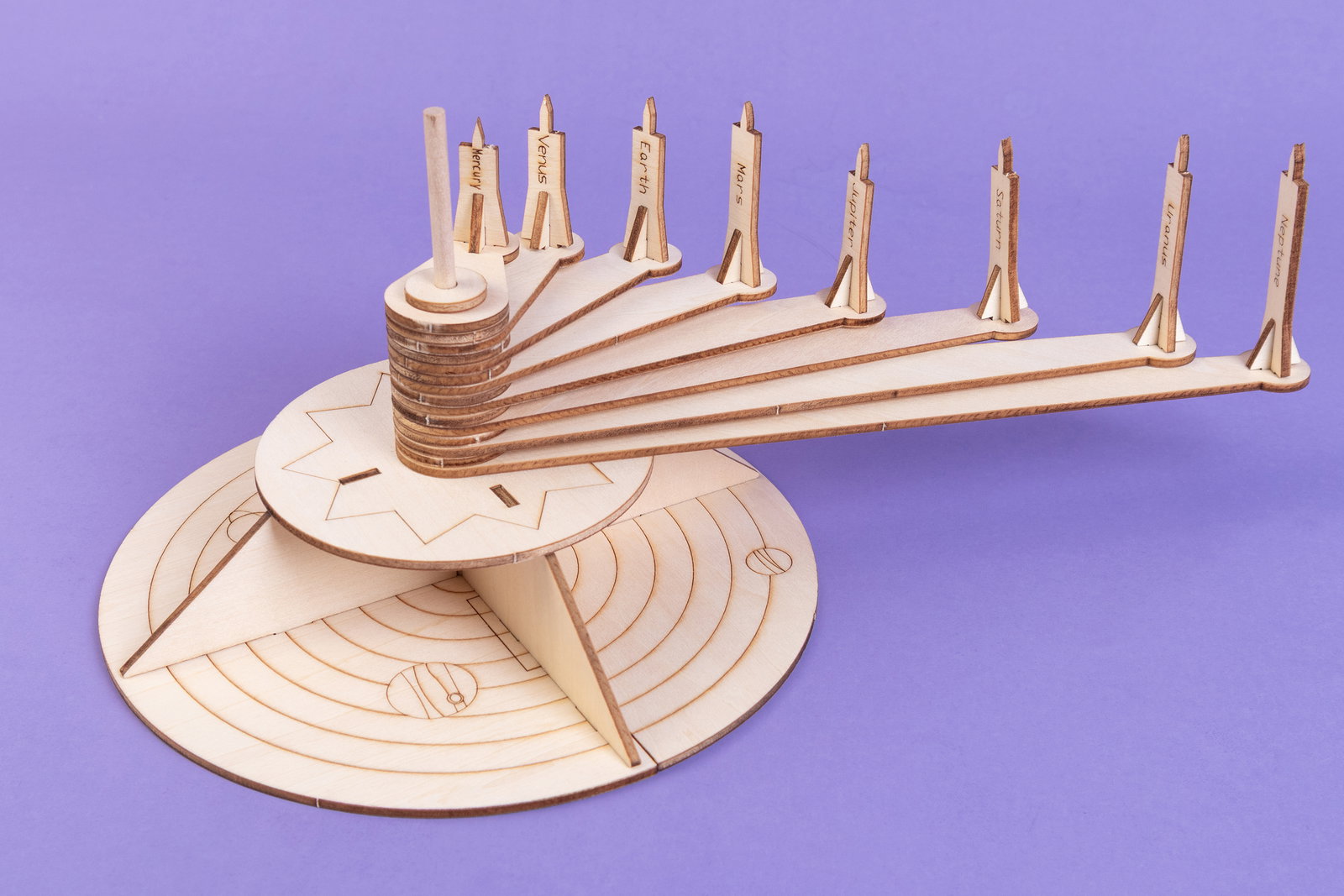
Add the Sun and Planets
Choose the foam balls by size and place them on the matching planet supports.
Size guide: Jupiter > Saturn > Uranus ≈ Neptune > Earth ≈ Venus > Mars > Mercury
Note: The foam balls are not made to exact scale, but their different sizes help show the relative size differences between the planets.
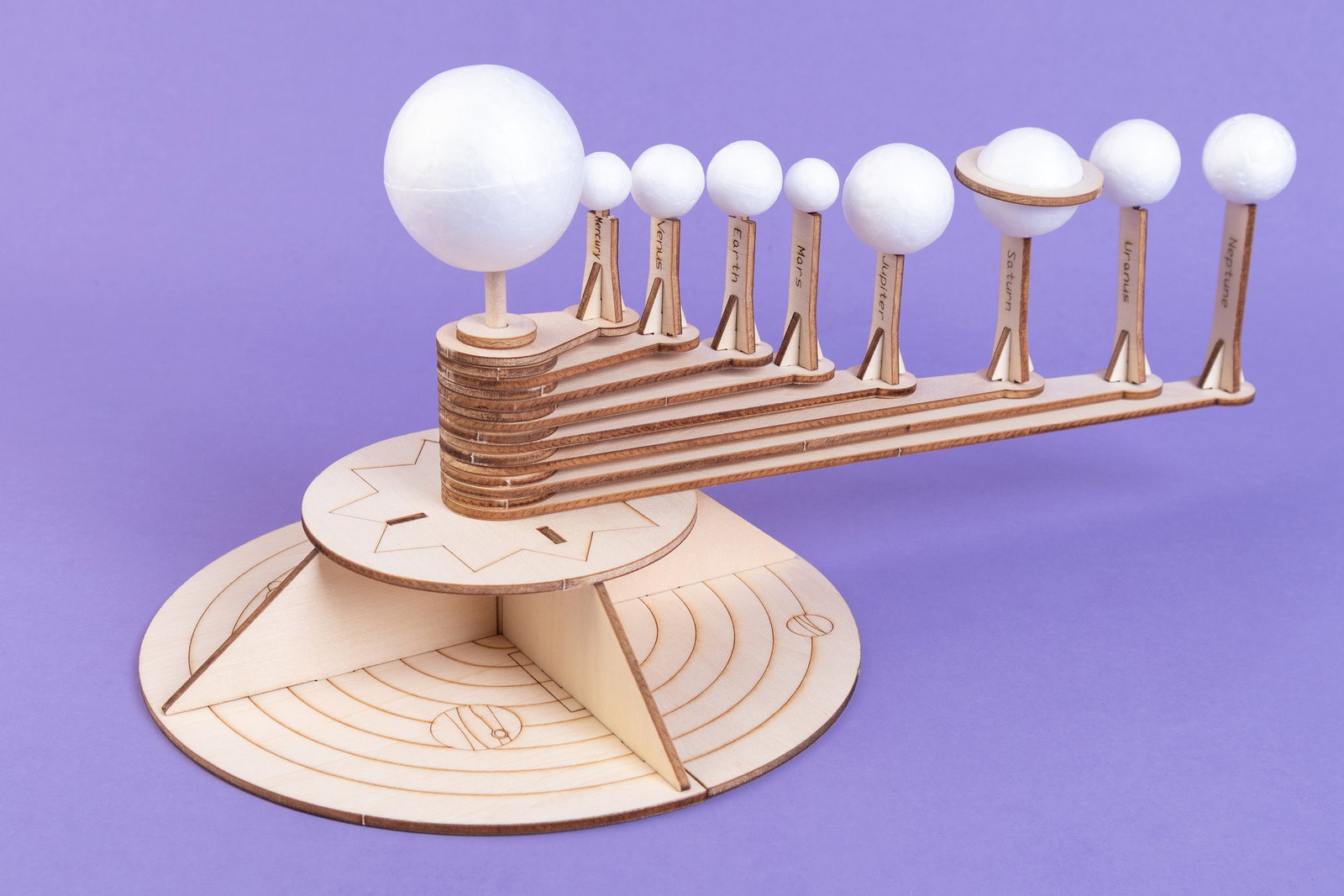
You did it!
Your solar system is complete
Great work. Now let's see what your model can teach us.

Explore the science
Explore your solar system
The Sun is at the center
The eight planets in our solar system orbit the Sun. Gravity keeps the planets traveling along their paths around it.
Distance matters
The planets are arranged by their distance from the Sun: Mercury → Venus → Earth → Mars → Jupiter → Saturn → Uranus → Neptune.
Planets come in different sizes
Jupiter is the largest planet, while Mercury is the smallest. Earth and Venus are similar in size, and Uranus and Neptune are also close in size.
Planets move at different speeds
Planets closer to the Sun generally complete their orbits faster. Mercury takes only about 88 Earth days to orbit the Sun, while Neptune takes about 165 Earth years.

Think like a scientist
Look at your model
Which planet is the largest? Which is the smallest? Which planet is closest to the Sun?
Point to each planet on your model and say its name out loud. Then try to put the planets in order from memory.
Remember: your model helps show the order and relative sizes of the planets, but the sizes and distances are not to scale.

Need help?
Missing a part or stuck on a step?
Send us a message and we will sort it out. Our support team answers every email within 24 hours.
Email support@kitsville.com All STEM kits